
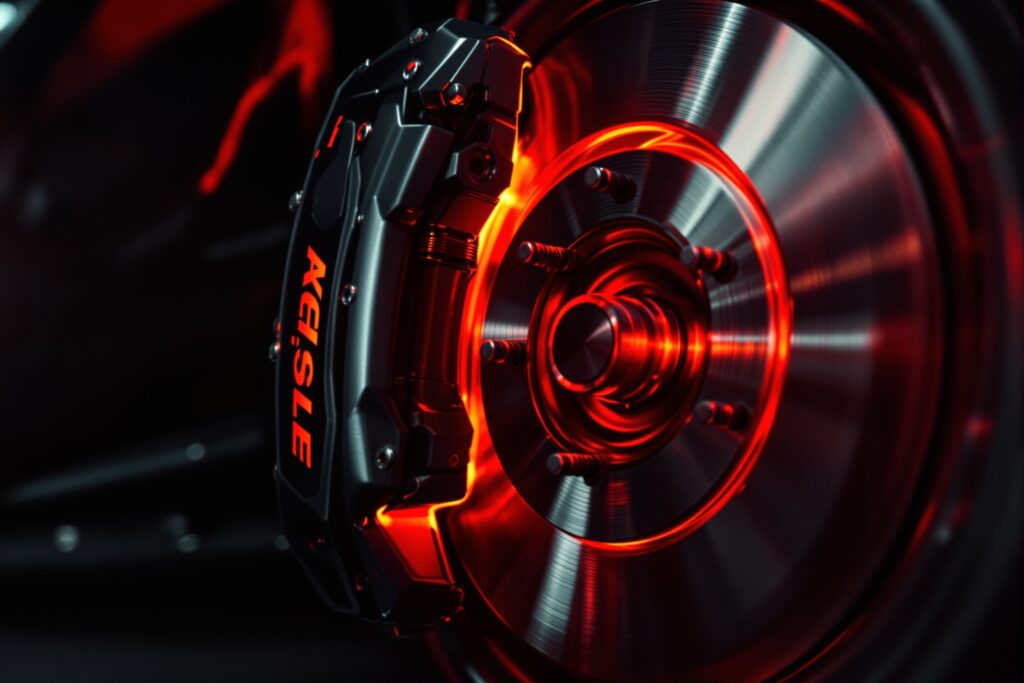
Understanding Brake Fade and How to Prevent It on Track
Brake fade is one of the most dangerous issues drivers can encounter during high-performance driving. It reduces braking effectiveness and can lead to loss of control if not addressed properly. Understanding the causes and prevention methods is essential for anyone planning to drive aggressively on track.
Brake fade occurs when the braking system becomes overheated. During repeated hard braking, heat builds up in the brake pads, rotors, and fluid. When temperatures exceed certain limits, components begin to lose efficiency. This results in longer stopping distances and reduced braking force.
There are several types of brake fade. Pad fade happens when the friction material overheats and loses its ability to grip the rotor. Fluid fade occurs when brake fluid boils, creating air bubbles in the system. These bubbles compress under pressure, reducing the effectiveness of the brake pedal. Mechanical fade can also occur if components expand due to heat, affecting alignment and contact.
One of the main causes of brake fade is inadequate cooling. Track driving generates much more heat than street driving, and stock braking systems are often not designed for such conditions. Without proper airflow, heat cannot dissipate quickly enough, leading to overheating.
Upgrading brake pads is one of the simplest ways to reduce fade. Performance pads are designed to operate at higher temperatures and maintain consistent friction. While they may produce more noise or dust, the benefits in performance and safety are significant.
Brake fluid is equally important. Standard fluid has a lower boiling point, making it more susceptible to fade. High-performance brake fluid can withstand higher temperatures and maintain consistent pedal feel. Regularly replacing fluid ensures it remains effective.
Driving technique also plays a major role. Continuous braking generates excessive heat, while controlled braking allows components to cool between uses. Learning to brake efficiently, using firm but brief pressure, helps manage temperatures and improve performance.
Cooling upgrades can further reduce the risk of brake fade. Brake ducts direct airflow to critical components, helping dissipate heat more effectively. Larger rotors and multi-piston calipers also improve heat management by increasing surface area.
Monitoring brake performance during a track session is essential. If you notice a soft pedal or reduced braking response, it is important to slow down and allow the system to cool. Ignoring these signs can lead to complete brake failure.
Preventing brake fade is not about a single solution but a combination of upgrades and proper driving habits. By understanding how your braking system behaves under stress, you can make informed decisions that improve both safety and performance.